
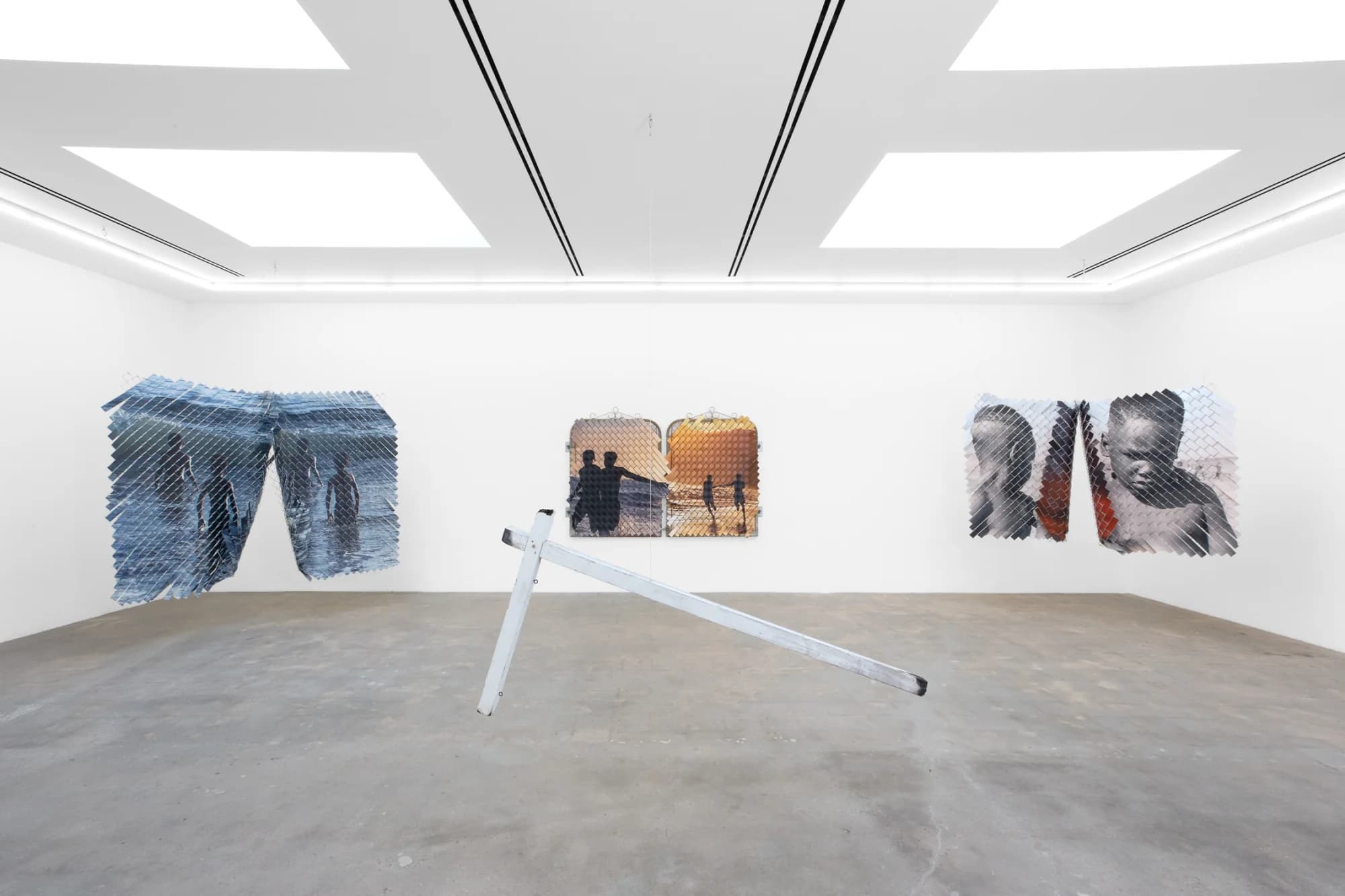
Glen Wilson is determined to excavate the margins, to investigate and focus his attention toward what resonates there. His discovery, evidence as a reflection of cellular memory comprising the sometimes slim connections of our instincts, spiritual remembrance and our comfort, weave together forming a visual poetics. His vocabulary embodies and emboldens a will to reclaim, map and negotiate tension and to survive gracefully, creatively, proudly.
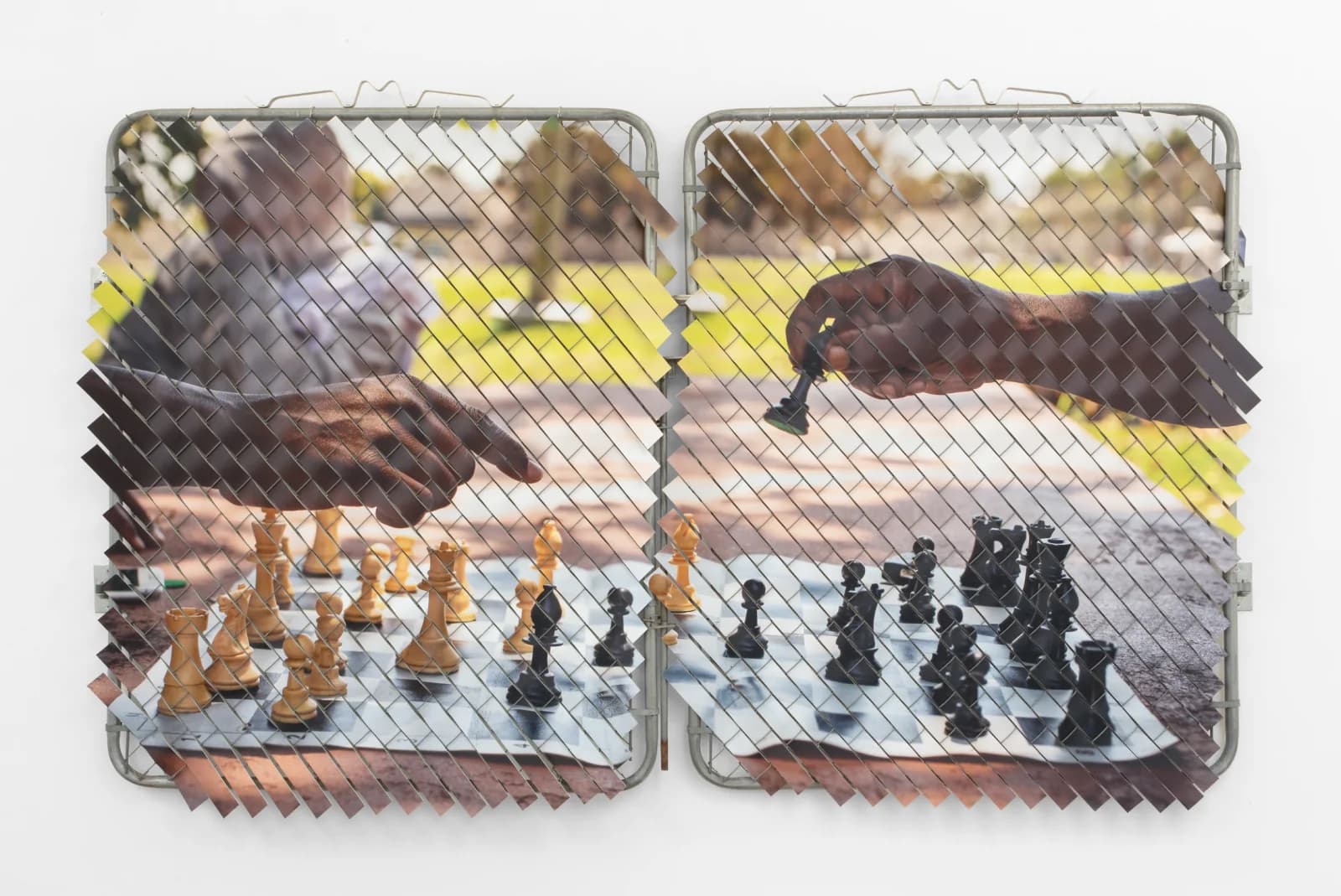
Exploring the broad movement of African Diasporic cultural heritage from the vantage point of his Oakwood Neighborhood in Venice and from global travels, Wilson’s richly textured, forceful language gives voice to these narratives and aesthetics that would appear to lie outside the mainstream. Yet, they make up a central fabric, around which the American experience is woven. His interest in exercising the photographic medium to its full potential – beyond an authoritative gaze – is an aspect of the call and response he has with history and his subjects, visible in the relationship of the works to each other, as well as to the larger arc of cultural significance.
Slim Margins holds a synergy of content and meaning. A fisherman’s perspective in Mpanjono (Fishermen á Morondova), imagery on a Madagascar beach calls and responds to Ebeji (Racing Pharoah’s Light) and Other Suns, similarly bringing us to the ocean’s edge, a conduit for memory and possibility. These stories are part of a continuum of experience and aesthetics that fuse Wilson’s cultural production with his formal training, first at Yale then UC San Diego, and his belief in the value of standing and stretching at the tense intersections of public and private, presence and absence, privilege and hunger.
It is in these contested locations, in these slim margins where Glen and I connect.
 Glen Wilson