In Vermont daily life is experienced intensely, as every moment not in the studio – nature’s logic stands in front of me with crossed arms.
— Elizabeth Neel, August 2020
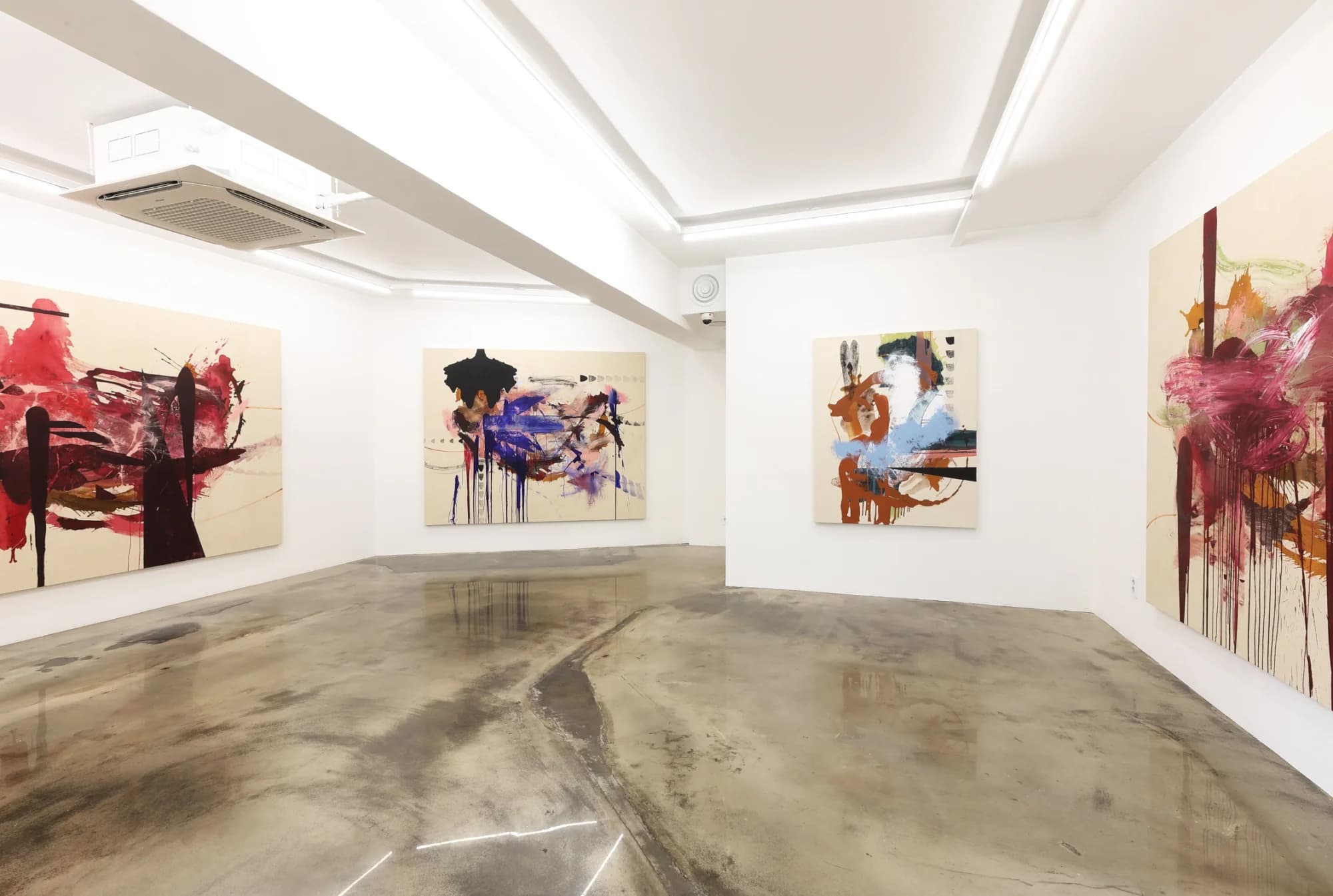
American painter Elizabeth Neel’s latest exhibition, In the Belly of the Whale, is a hypnotic gateway into the beguiling pull of abstraction and a bow to Sansu painting. Neel’s inaugural solo show in Asia, and Salon 94’s first collaborative show with Various Small Fires, bursts with unexpected hues and notations from nature – showcasing four grand landscapes, alongside eight smaller paintings on paper.
An intensely physical painter, Neel’s mysterious shapes, symbols and strokes in acrylic are poured, brushed, printed, folded, stamped, rolled and dragged onto raw canvas, only to be stretched after completion. As if tilling, harrowing, and leveling a field, it is not surprising that these paintings, made over the long Covid months, were wrought in a barn on her family’s farm in Morristown, Vermont.
In traditional East Asian Art and Sansu painting, landscapes are a treasured subject, representing both nature itself and how we view it. Here Neel honors these principles, depicting her surroundings in color, negative space, composition and marks.
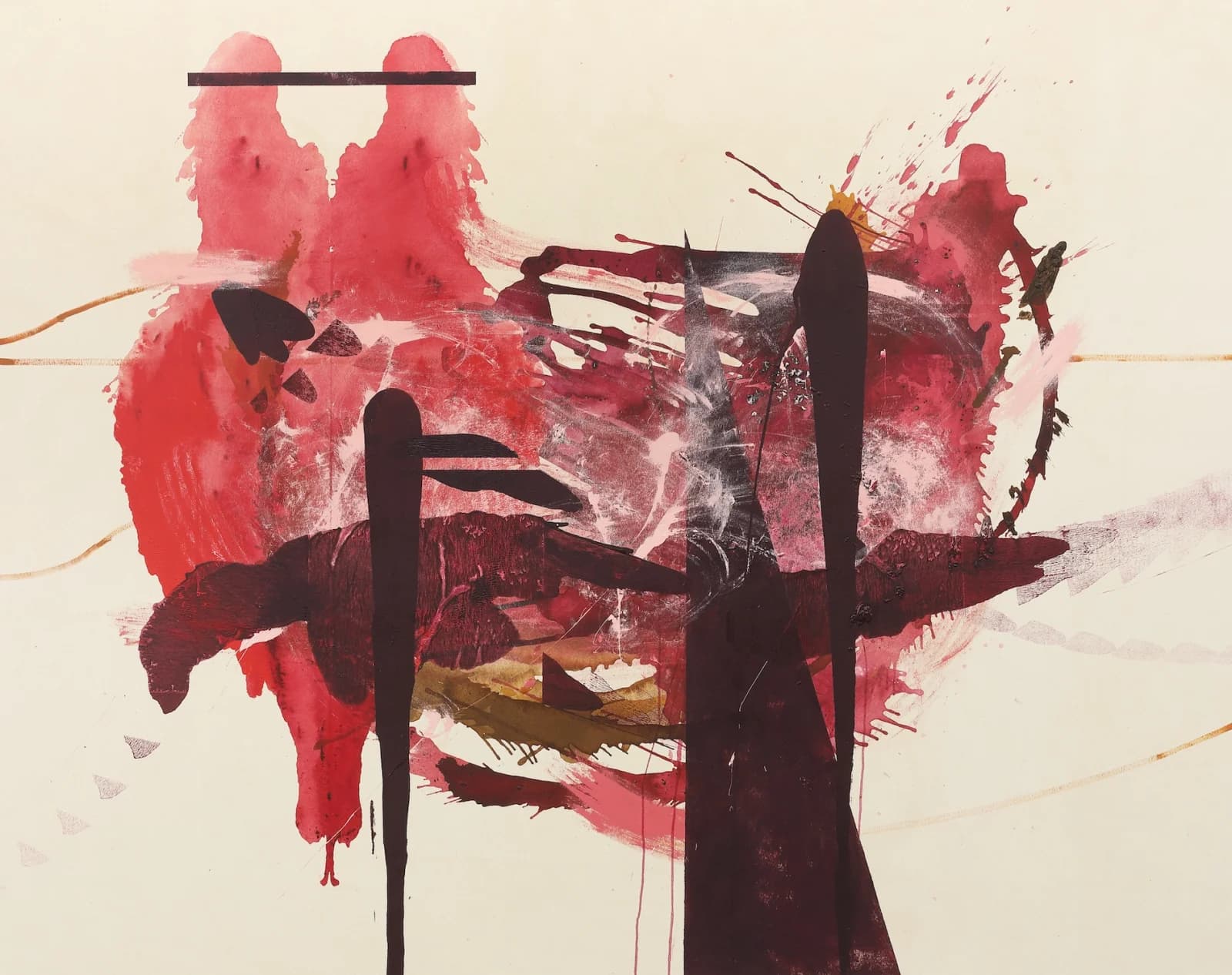
Neel’s red is the particular mix of blood and mud that soaks a newly born calf, or the rusty clay seeping through her toes after a summer pour. A heroic and joyful painting, Captivity shows off a bouquet of burgundy and crimson reds, hot pinks and dusty roses, and, as if left alone in the barn at night, small animals seem to have left their trace, as their imagined footprints march across the canvas muddying and swirling together the wet paint. And, as if a sudden change of season – speckles of white paint pepper Captivity, like a dusting of snow.
The granddaughter of iconic American portrait painter Alice Neel, and sister of filmmaker Andrew Neel, Neel has honed a painting practice that consistently draws from everything around her.