I really didn’t know Betty Brown’s work or anything about her. I had driven almost an hour from my lake house to meet Tubby Brown. I had seen the pieces in a few galleries and at Folk Fest over the years. Bright colors were painted on chairs and benches with biblical references; whales that had cutout Jonahs in their bellies; an awkward white-suited Elvis spinning on top of a gold record; and a black car that looked like it could have been constructed for a Boy Scout’s pinewood derby, except that a red devil was driving and a fiery blaze was painted on the sides as if it was about to take someone to Hell. He told me he started building the furniture and “things” when he retired to keep busy at the age of 52, after selling his grocery store in 1981. He never admitted that he convinced his wife, Betty, to enliven them.
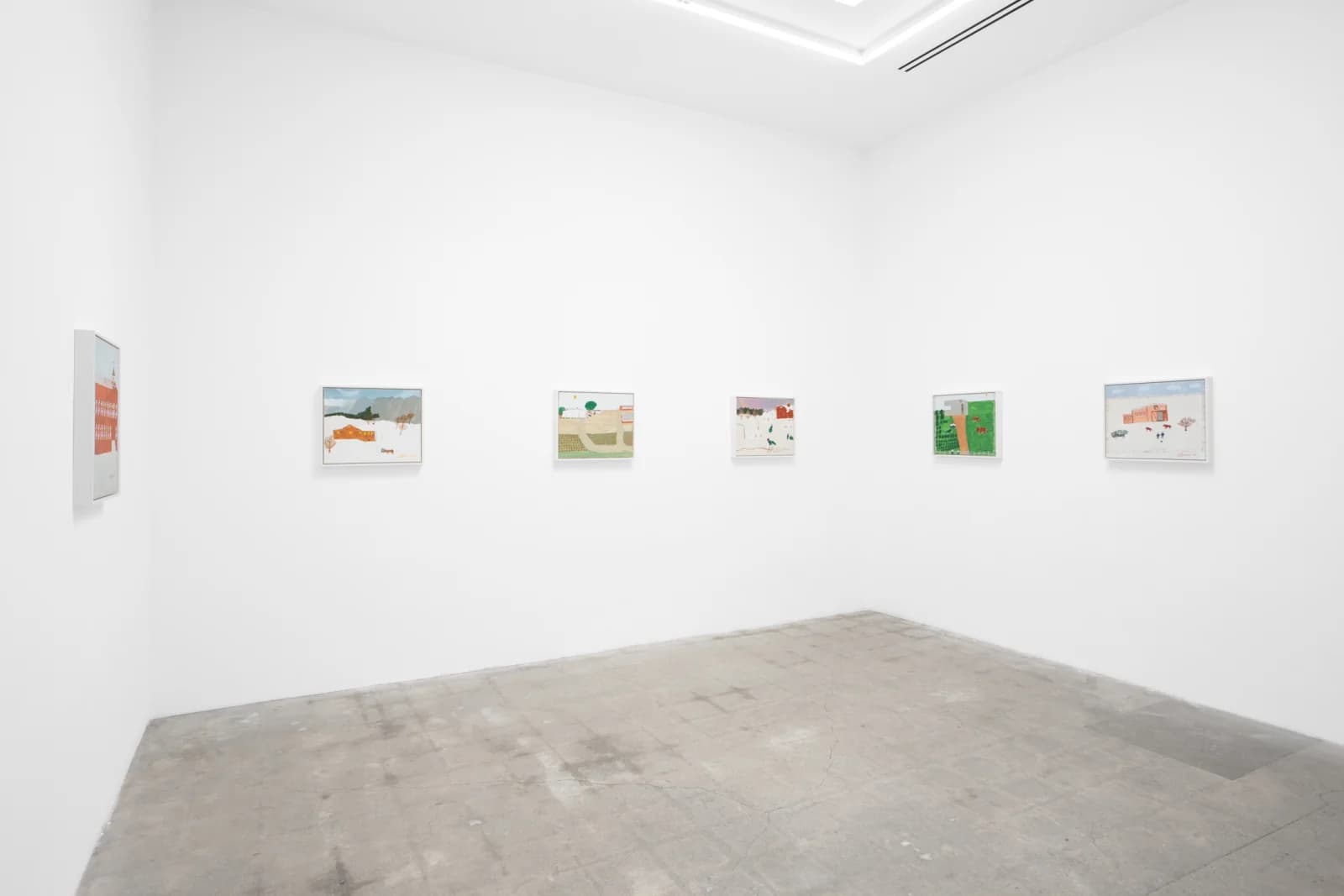
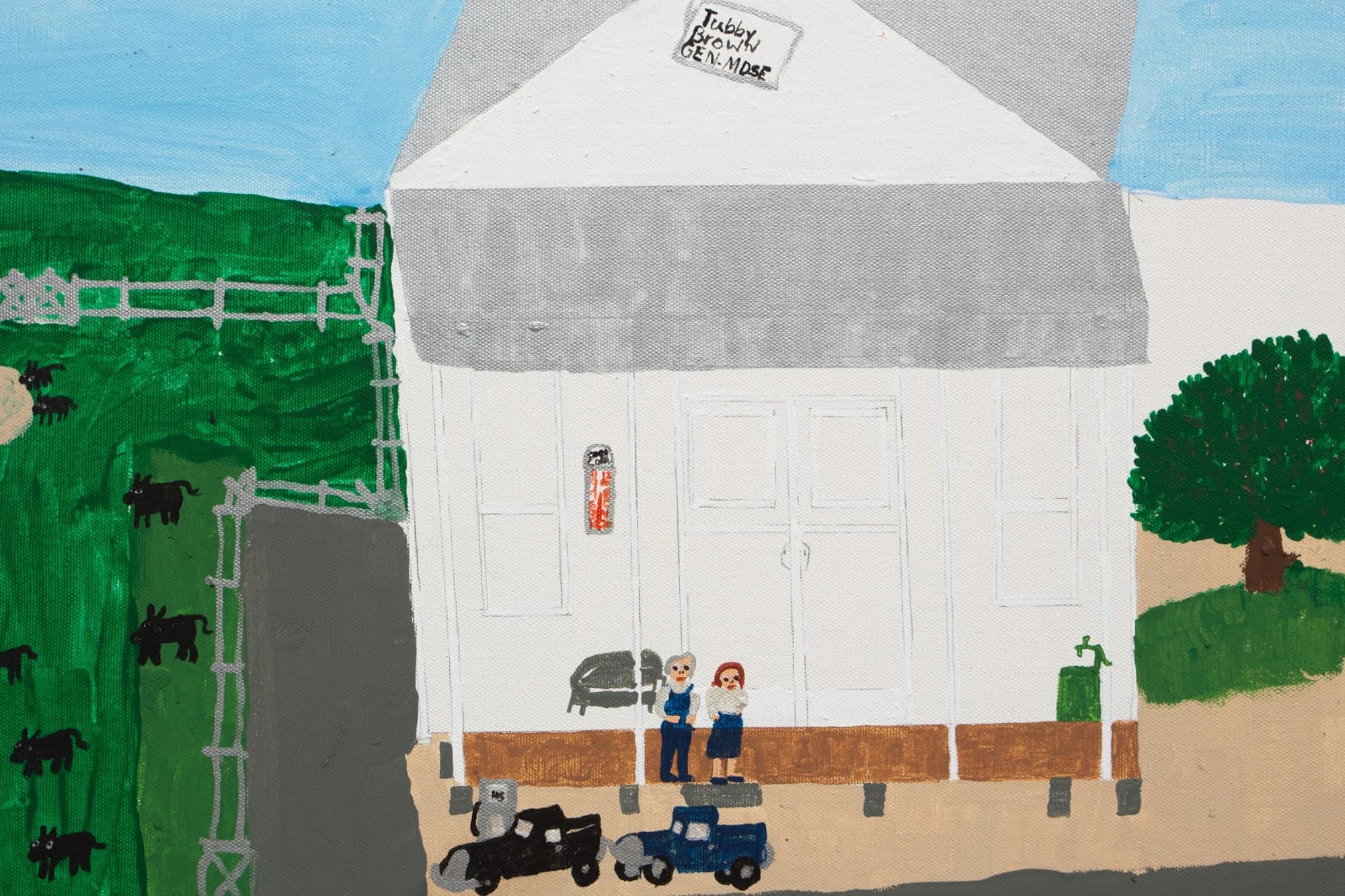
What I wasn’t prepared for were Betty’s own paintings. I had to catch my breath and hold my tongue. I didn’t want to embarrass myself or him, but her work was OMG stunning. The early ones showed her trepidation as she first drew out scenes with pencil and then colored them with pale watercolors. Sweet, gentle, and nuanced on thin paper, and framed in barnboard or whatever they scrounged up at the local flea market. But then she found acrylics and canvas or canvas boards. Colors exploded into bright hues applied to scenes of houses, yards, and fields populated with rows of produce and partially picked cotton; families fishing, camping, or swimming at the shore; football and baseball games crowded with fans; snowfalls, summers, and autumns, all rich with simplicity and grace.
The absolute treasure of these paintings was Betty’s systematic use of perspective, or some would say, her lack of it. She often wanted to show several sides of a building at the same time. So, she would. Houses could turn sideways. Roads might climb to the sky. Fences would turn a corner and lie down.